

Artistic Excellence, Knowledge Exchange, and Global Connection.
About Us
Kvareli Foundation is a cultural center in Georgia dedicated to contemporary art and artistic research. The Foundation develops exhibitions and public programs, including lectures, workshops, and talks, that foster critical engagement with contemporary artistic practices. Grounded in the social and cultural context of Georgia while actively engaging international artistic discourse, Kvareli Foundation supports the long-term development and visibility of artistic practice. Through exhibitions, dialogue, and knowledge exchange, it aims to create a space where contemporary art is experienced not only as a finished result, but as an evolving process outlined by context and public reflection.
Kvareli Manifesto
The Kvareli Foundation’s manifesto proposes a model in which local context and international discourse are understood as mutually constitutive. Artistic practices are shaped by the conditions in which they emerge, and their significance unfolds through sustained engagement rather than singular moments of visibility. By prioritizing long-term collaboration with artists, critical reflection, and continuity through documentation and dialogue, the Foundation affirms a commitment to supporting practices that evolve over time. By engaging in global conversations while remaining closely connected to their local conditions, Kvareli Foundation positions artistic production in Georgia as an active and meaningful participant in contemporary art today.
The Foundation aims to situate local artistic production within the existing movements, discourses, and material conditions that define contemporary art today, while remaining grounded in the social and cultural context of Georgia. This means working with artists not only on how work is presented but also on how it is developed, read, and sustained over time.
Rather than treating local context and international discourse as separate or opposing forces, the institution approaches them as interdependent. Artistic practices are shaped by the conditions in which they are produced. This involves close, sustained engagement with artists: time to develop work, space for discussion and reflection, and attention to how practices evolve rather than how they appear at a single moment. Context is built through continuity through repeated encounters, documentation, writing, and dialogue rather than through one-off events.
Contemporary art unfolds within shared global conversations. Our approach is to engage these conversations thoughtfully, ensuring that local artistic production is situated within contemporary artistic discourse while remaining closely connected to the conditions and contexts from which it emerges.
The Foundation aims to situate local artistic production within the existing movements, discourses, and material conditions that define contemporary art today, while remaining grounded in the social and cultural context of Georgia. This means working with artists not only on how work is presented but also on how it is developed, read, and sustained over time.
Rather than treating local context and international discourse as separate or opposing forces, the institution approaches them as interdependent. Artistic practices are shaped by the conditions in which they are produced. This involves close, sustained engagement with artists: time to develop work, space for discussion and reflection, and attention to how practices evolve rather than how they appear at a single moment. Context is built through continuity through repeated encounters, documentation, writing, and dialogue rather than through one-off events.
Contemporary art unfolds within shared global conversations. Our approach is to engage these conversations thoughtfully, ensuring that local artistic production is situated within contemporary artistic discourse while remaining closely connected to the conditions and contexts from which it emerges.
Architecture and Nature
Located in the region of Kakheti, the Kvareli Foundation is rooted in an area that has played a central role in Georgia’s political, cultural, and intellectual history. Kakheti was historically one of the country’s key kingdoms, with cities such as Telavi serving as royal and administrative centers, and monasteries like Alaverdi Monastery functioning as sites of education, manuscript production, and artistic transmission. The region’s long-standing traditions of viticulture, agriculture, and communal life have shaped a culture grounded in continuity, labor, and close relationships to land and place. By establishing a contemporary art institution in Kakheti, the Kvareli Foundation situates current artistic practices within a historically layered environment where culture has always been produced outside metropolitan centers.
Kvareli Foundation is shaped by its geographical position and its relationship to landscape and place. Its location beyond the urban center is a deliberate choice, reflecting a commitment to decentralizing cultural production and expanding the geography of contemporary art in Georgia. By strengthening cultural activity beyond the capital, the Foundation also contributes to regional development, supporting the visibility, sustainability, and cultural vitality of regions within Georgia. By operating outside the capital, the Foundation creates conditions for a slower, more focused engagement with artistic practice—one that allows time for development, reflection, and sustained dialogue.
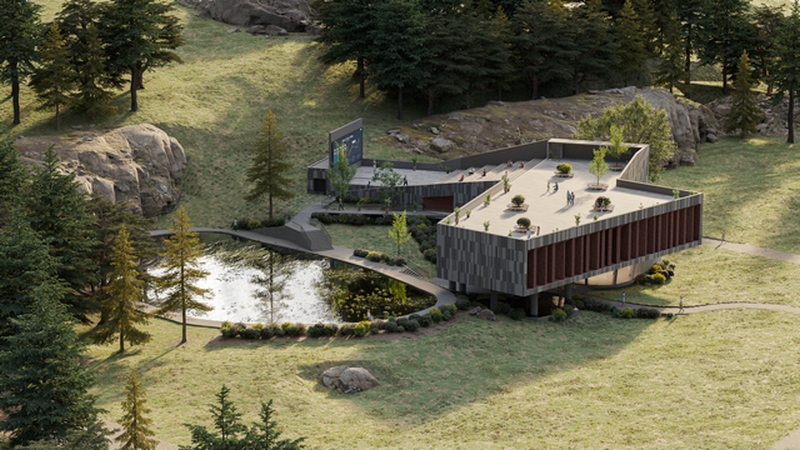
Situated within a natural environment, the Foundation offers artists and audiences a setting that supports long-term thinking and attentive encounters with art. Distance from metropolitan art circuits enables a different institutional rhythm, less driven by immediacy and visibility, and more attuned to process and continuity. In this context, contemporary art is approached as a practice embedded in place, shaped by its surroundings, and open to deeper forms of engagement beyond the structures of the capital.
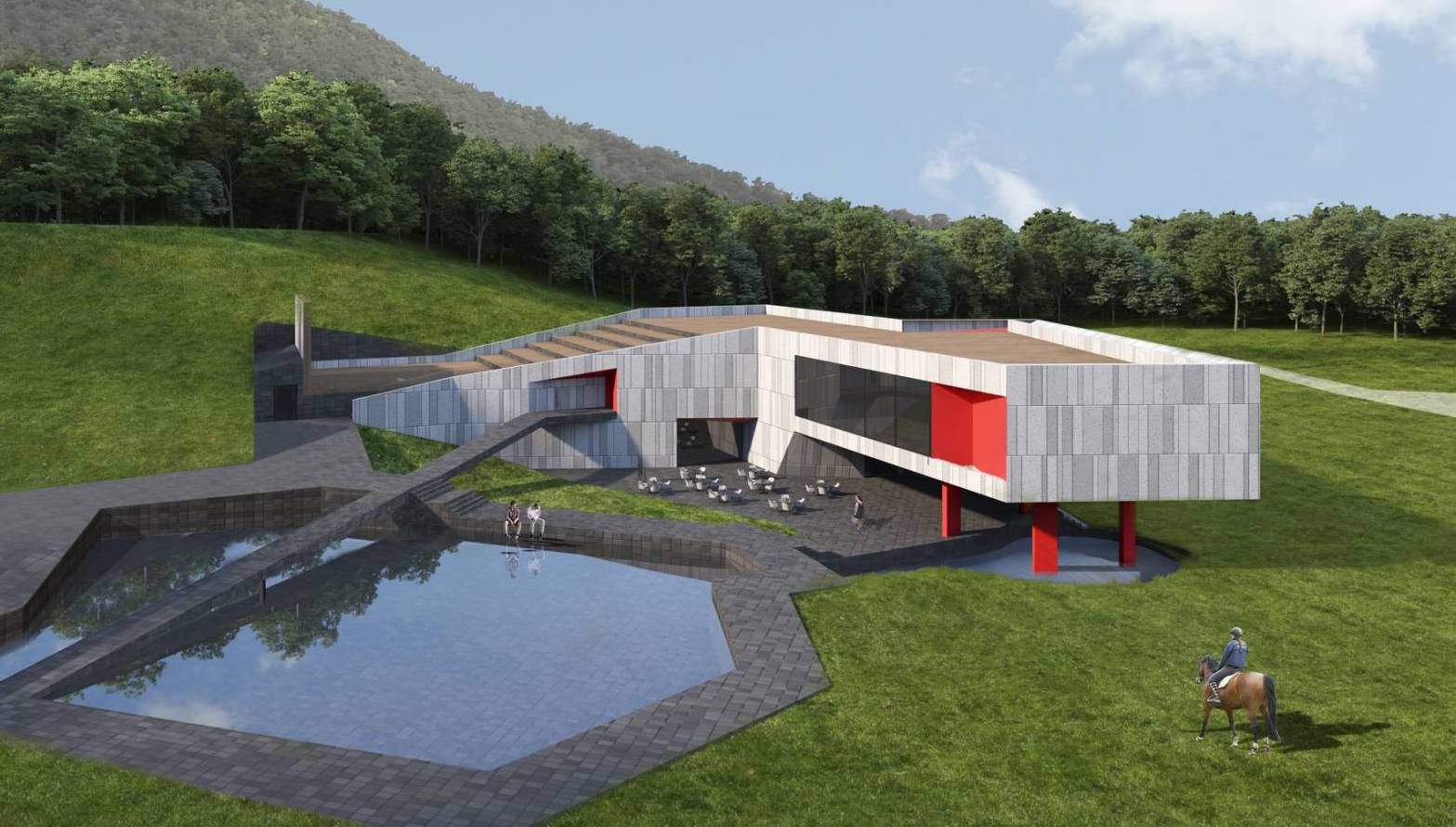
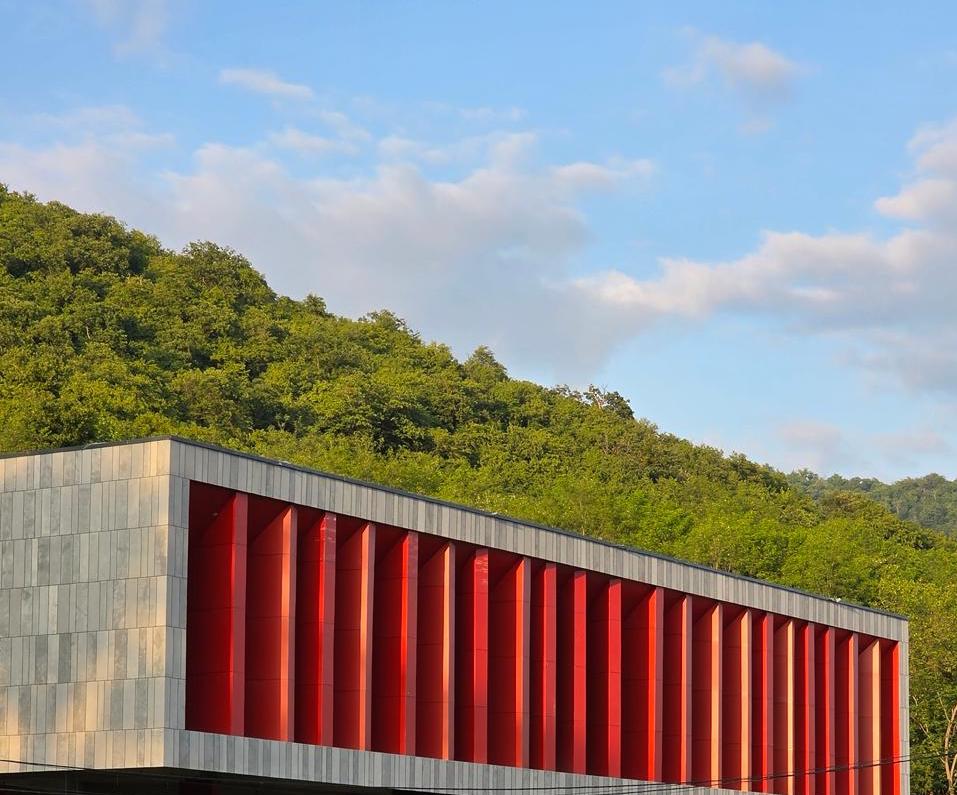
The Kvareli Foundation is housed in a multifunctional building designed to support a wide range of artistic, educational, and public activities. Conceived as a flexible and adaptable space, the building accommodates contemporary art exhibitions alongside public programs such as lectures, workshops, screenings, and discussions. Its spatial organization allows for different scales of use—from focused research and production to larger public gatherings - enabling the Foundation to respond to the evolving needs of artists and audiences. Rather than serving a single function, the building operates as an integrated cultural environment where exhibition-making, learning, exchange, and reflection coexist, reinforcing the Foundation’s commitment to sustained artistic practice and long-term engagement.
Kvareli Foundation is shaped by its geographical position and its relationship to landscape and place. Its location beyond the urban center is a deliberate choice, reflecting a commitment to decentralizing cultural production and expanding the geography of contemporary art in Georgia. By strengthening cultural activity beyond the capital, the Foundation also contributes to regional development, supporting the visibility, sustainability, and cultural vitality of regions within Georgia. By operating outside the capital, the Foundation creates conditions for a slower, more focused engagement with artistic practice—one that allows time for development, reflection, and sustained dialogue.
Situated within a natural environment, the Foundation offers artists and audiences a setting that supports long-term thinking and attentive encounters with art. Distance from metropolitan art circuits enables a different institutional rhythm, less driven by immediacy and visibility, and more attuned to process and continuity. In this context, contemporary art is approached as a practice embedded in place, shaped by its surroundings, and open to deeper forms of engagement beyond the structures of the capital.
The Kvareli Foundation is housed in a multifunctional building designed to support a wide range of artistic, educational, and public activities. Conceived as a flexible and adaptable space, the building accommodates contemporary art exhibitions alongside public programs such as lectures, workshops, screenings, and discussions. Its spatial organization allows for different scales of use—from focused research and production to larger public gatherings - enabling the Foundation to respond to the evolving needs of artists and audiences. Rather than serving a single function, the building operates as an integrated cultural environment where exhibition-making, learning, exchange, and reflection coexist, reinforcing the Foundation’s commitment to sustained artistic practice and long-term engagement.